

Cart
0
Nutrition plays an important role in the preparation for sale of all horses, particularly in the auction sale of yearlings, which are individuals with still significant growth requirements. If the value of the horse is to be maximized, it is essential that it look visually perfect at the time of sale.
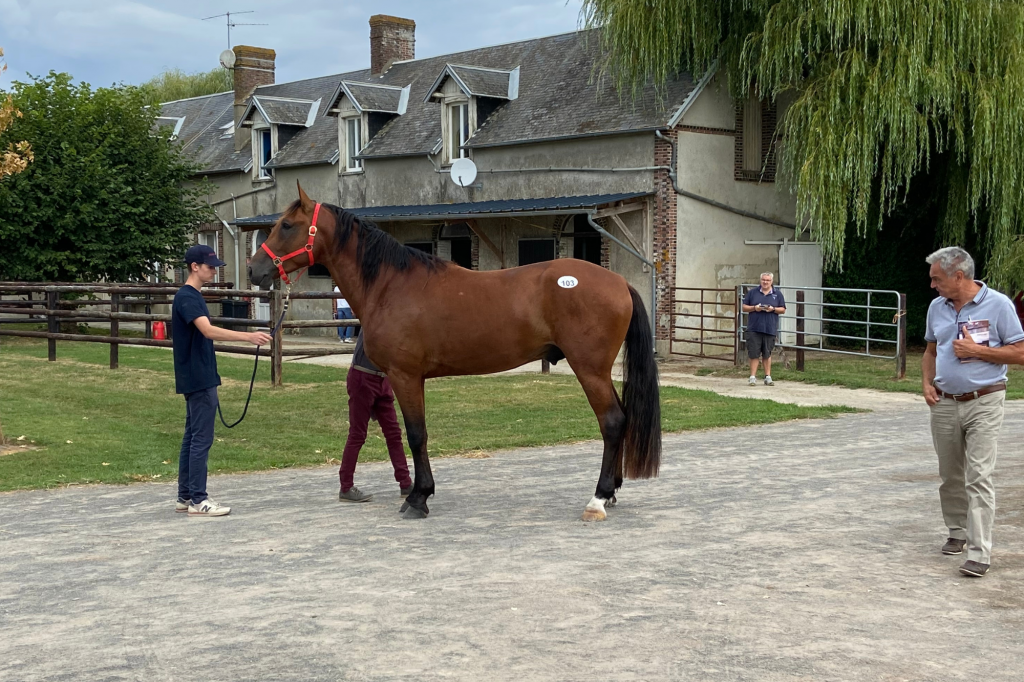
Hay and cereals in yearling to be shown at auctions
Preparation for sale is an ongoing process for young horses. If they are properly weaned and maintained with a BCS of 5, there will be no need to change their nutrition when they are prepared for sale. Sound preparation for sale requires a minimum of 90-120 days of exercise and proper nutrition.
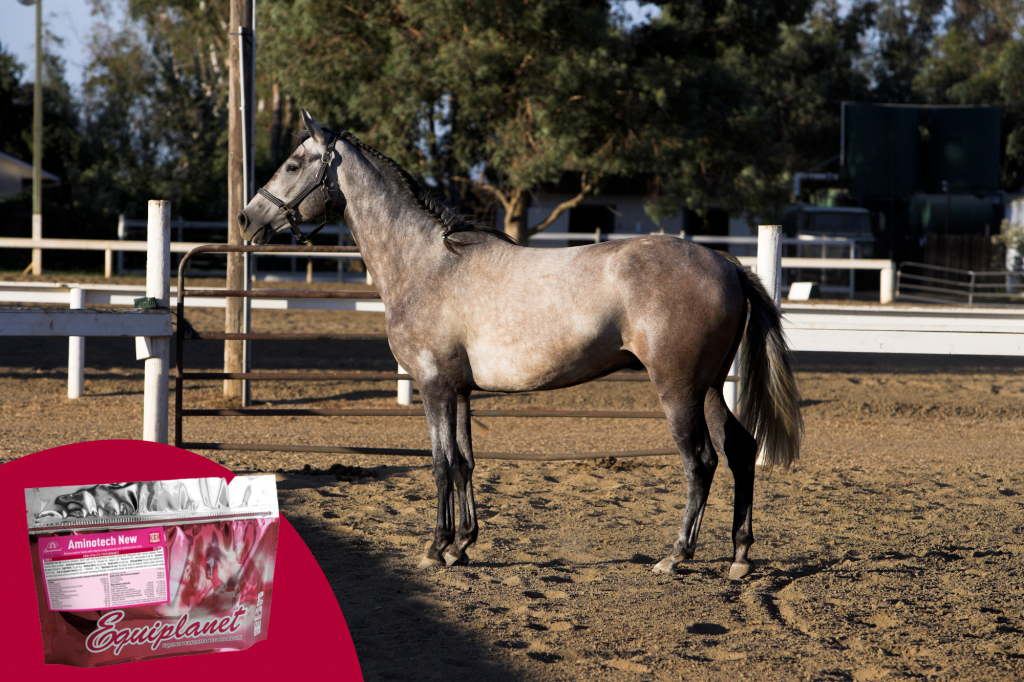
Yearlings should have good quality forage or pasture available to help develop body condition, plus feeds should contain vitamins A, D, E and biotin for proper metabolism and coat and hoof quality. If a grain mix is used, it will be necessary to supplement the ration with complementary feeds that contain these vitamins, such as Aminotech new, which provides useful vitamins, minerals and amino acids at this stage.
Promoting muscle development in yearling to be shown at auctions
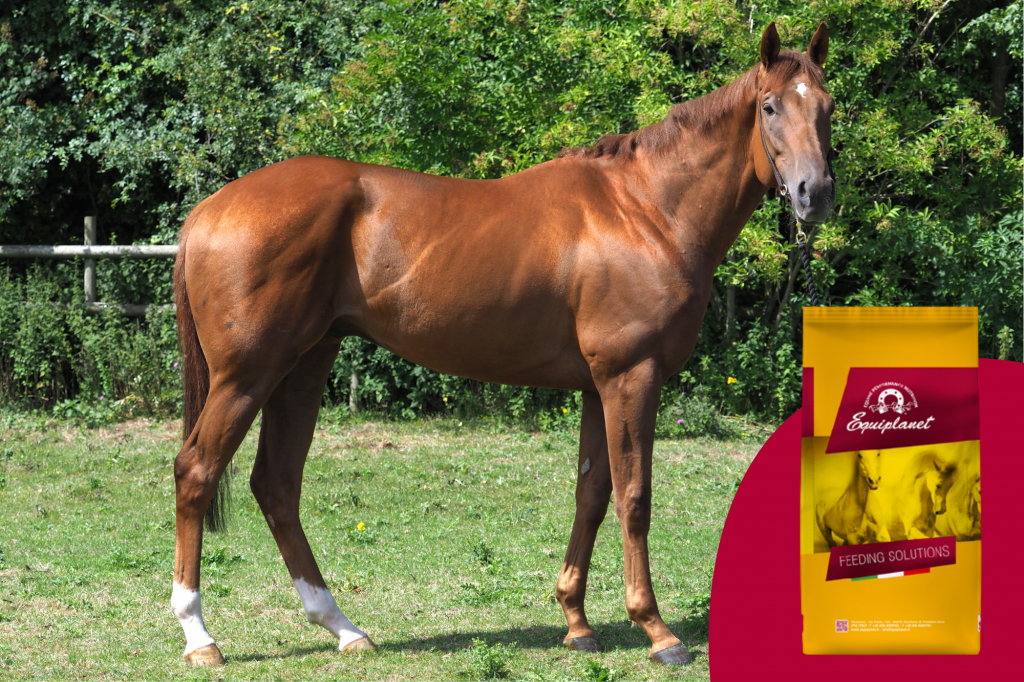
Horses with well-developed muscles are rewarded at auctions. In yearlings this must be built with age-compatible training and with the help of balancers with good protein content and/or complementary amino acid feeds. A good amino acid pool works on both muscle mass building and post exercise recovery time. The use of the daily amount of complementary feeds such as Mac Breed should also be determined by the base feed used and the forage, if, for example, alfalfa is used in the ration.
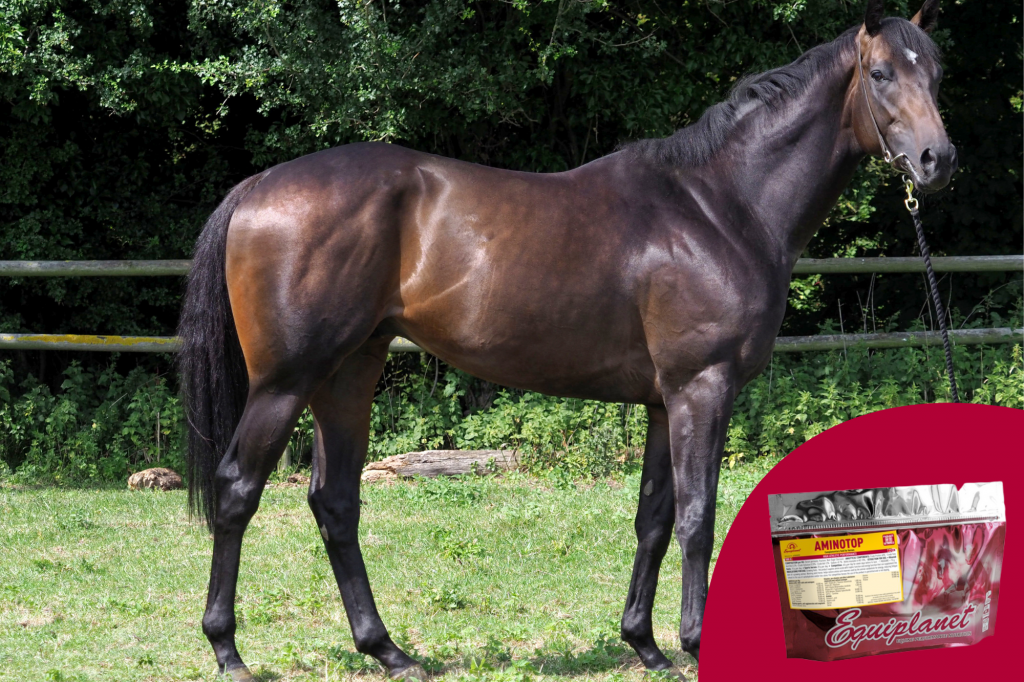
The use of complementary feeds containing amino acids such as Aminotop can also be used for only a short period to define the muscles or for longer periods if used as the sole source of protein. We always recommend that people with expertise in nutrition also be consulted at this sensitive stage for young horses to formulate a balanced nutritional plan.
Hoof quality in yearling to be shown at auctions
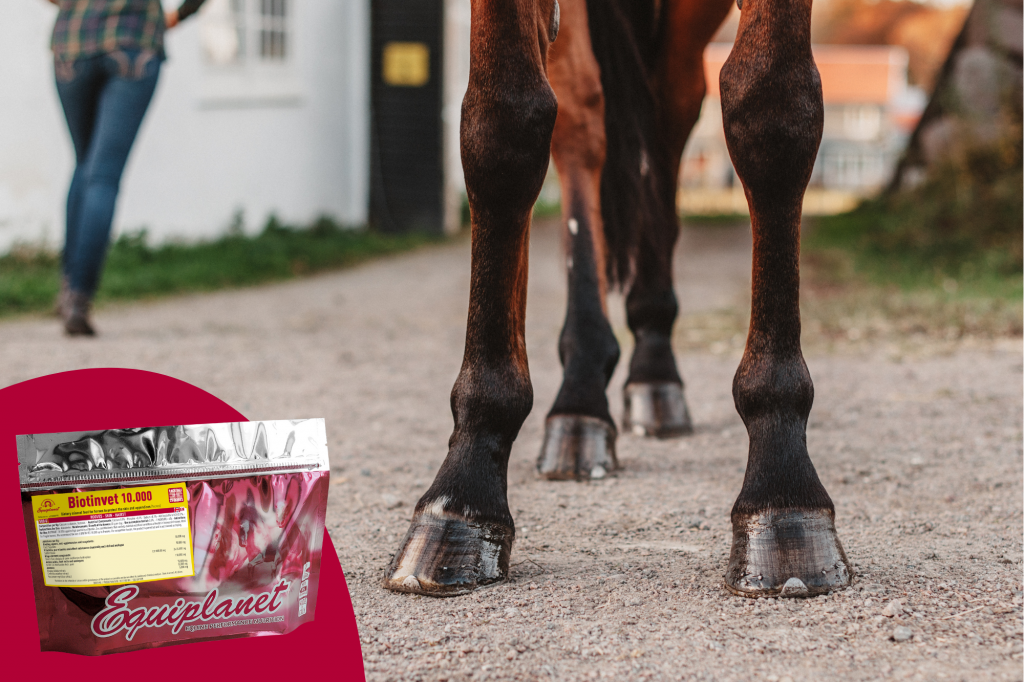
In yearling before auction, it is preferable for the hoof to be free of abnormalities, such as growth rings. According to experts, young horse that are trimming frequently and undergo the removal of a significant amount of horn tend to develop weak and brittle hoof walls. The evaluation and treatment of the feet and limbs during the first year of life condition the foal's success at the rods and as an athlete as an adult, so there must be special attention. In cases of hoof fragility, cycles with dietary feeds containing zinc and biotin such as BiotinVet 10,000, with 10,000 mg of biotin per kg of product, equal to 2 grams per daily amount to be fed, are to be evaluated.
Coat quality in yearling to be shown at auctions
A smooth, shiny coat is a condition that should be present in horses, not just for a sale. A glossy coat is a manifest sign of the horse's well-being and skin integrity. Likewise, the manes should be shiny and free of knots. This requires a combination of feeding and coat care.

Omega 3, as we have already seen in our previous insights as https://www.equiplanet.it/grassi-e-oli-nellalimentazione-del-cavallo/ has several benefits on the horse, including promoting skin integrity. For this reason, in the period before young horses are sold at auctions, it is a good idea to feed vegetable, cold-pressed oils with a good balance of omega 3 and omega 6. Oil performance contains linseed oil, soybean oil and rice oil and vitamin E. This complementary feed promotes skin nourishment and coat shine.
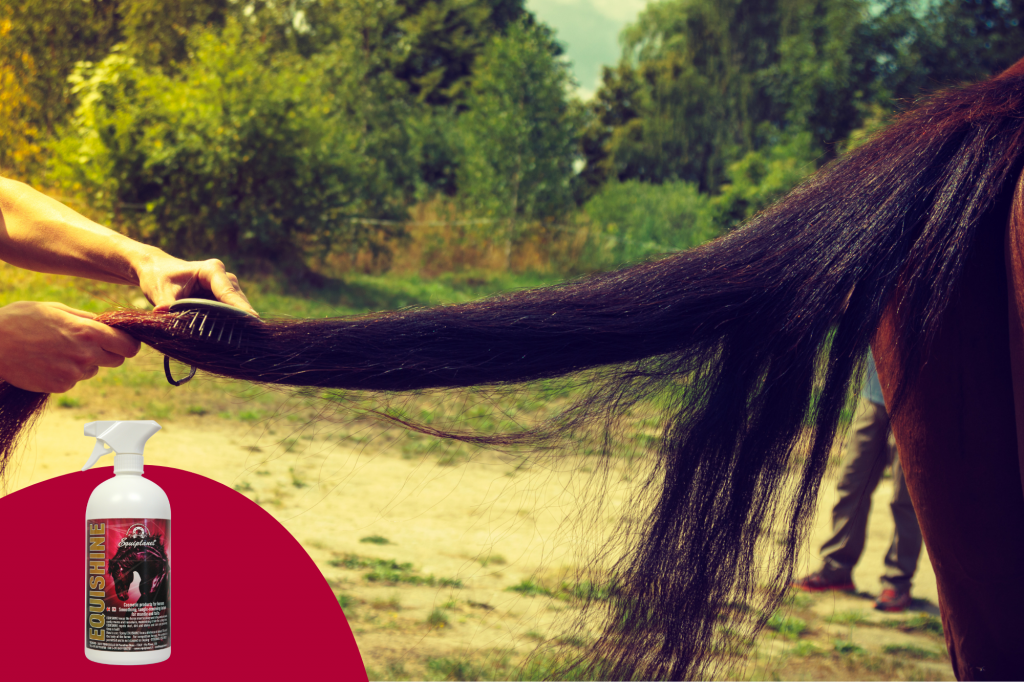
Similarly, Equishine is recommended as an untangling product that gives shine to the tail and mane, making them shiny and knot-free. In summer, especially, dust tends to accumulate more easily on the manes, so daily care of these precious skin annexes is important.
How to manage stress in yearling to be shown at auctions

Each type of horse has specific requirements, and each individual within a group may have special needs. After weaning, young horses go through a phase of loss that can drastically alter their body shape. This is because some weaning foals suffer a great deal of stress from being away from their mother, from the group, and from possible transport. During this phase and the phase leading up to the auction or sale, it is important to protect the stomach lining. Trophogast pellets, at these junctures prove particularly useful in reducing stress reactions.
Potbellied yearlings?

Young horses that have yet to begin major sporting activity can sometimes be potbellied, resulting in poor slenderness. Complementary feeds containing prebiotics and probiotics such as Enterovet can be given to help reduce abdominal volume, with improved fiber digestion and subsequent intestinal fermentation.
The results of good nutrition provided from an early age are certainly visible in yearlings, but they also provide a solid foundation for the athletic careers these horses are destined for.
When feeding your yearlings or horses, always turn to experts in the field. You can email us at info@equiplanet.it and we will help you with a nutritional plan to meet the needs of your foal or horse.
Bibliography
- https://www.bloodhorse.com/horse-racing/articles/265325/pagan-shares-data-on-thoroughbred-growth-performance
- Advances in horse nutrition, Joe Pagan, 1997. Pg 444-450
- Farriery for the young horse, SE O’Grady, 2008
- Comparison of endoscopic, necropsy and histology scoring of equine gastric ulcers. F M Andrews, 2002
- Omega 3 Fatty Acid and Skin Diseases. Sawada Y, 2021
- Effect of dietary omega-3 fatty acid source on plasma and red blood cell membrane composition and immune function in yearling horses. K R Vineyard, 2009

Recent Post


Recommended products

