

Cart
0
Respect for the horse's ethology is important for its well-being: we know that, being a grazing herbivore, it should spend a lot of time in the paddock and the summer season invites us to follow precisely this type of management. However, we have to deal with insects, which without control can damage our horse's skin.

Insects harmful to the horse's skin
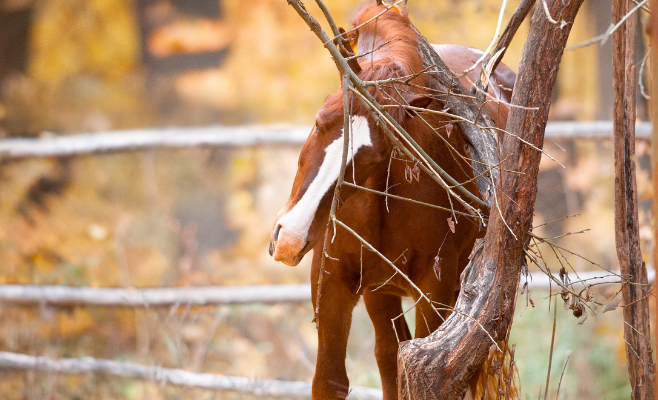
Insects harmful to the horse's skin are flies and mosquitoes and are the primary cause of itching. Culicoides spp, in particular, belong to a genus of midges whose saliva is particularly irritating to the horse's skin. The insects cause discomfort to horses not only through stings, but also through the self-inflicted trauma they cause when chasing them away.
What other measures can I take to avoid insect damage to my horse's skin?

- Put mosquito nets on the box windows
- Clean stalls daily
- Use blankets in the paddock for more sensitive animals
- Use masks to cover eyes and ears
- Avoid stagnant water surfaces
- Treat the environment with specific fly and insecticides
- Use natural repellents
Don't wait for insects to damage the skin
If we know that a subject is sensitive to insect bites we must not wait for Culicoides to cause damage to the horse's skin and intervene when things become difficult to manage. At that point it will be difficult to recover the normal physiology of the skin and it will take longer. Many of these strategies work best in young horses, before they become sensitised to too many harmful agents. In addition, an itchy horse is a suffering horse that reflects discomfort in its attitudes and can completely change its temperament.

Complementary feed to support insect-injured skin

From a nutritional point of view, supplementation with omega 3 fatty acids is useful for insect-injured horse skin because they help to soothe itching and because they help to reduce redness. The most useful omega 3 fatty acids for the well-being of the skin are certainly EPA (eicosapentaenoic acid) and DHA (docosahexaenoic acid), the direct sources of which are of marine origin. A marine source is, for example, the DHA-rich algae Schizochytrium, one of the main components of Algaphyt, a complementary Omega 3 feed.
Complementary feed rich in Omega 3 of plant origin? Are they useful for insect-injured skin?
Vegetable-derived products containing Omega 3, such as linseed, provide ALA (alpha-linolenic acid), but the horse needs EPA and DHA, so desaturase enzymes act by converting ALA into DHA in the cells.

Complementary feeds containing Omega 3 of plant origin such as Omega Energy can be used for this. The efficiency of conversion into DHA and Epa varies between species. Evidently, it occurs in horses because EPA and DHA are found in their cell membranes even when they are not supplied directly through the ration. Some research has suggested a greater cellular response to omega-3 fatty acids when horses consume EPA and DHA directly than when fed ALA.
Should you supplement your horse with algae to help with insect bite damaged skin?
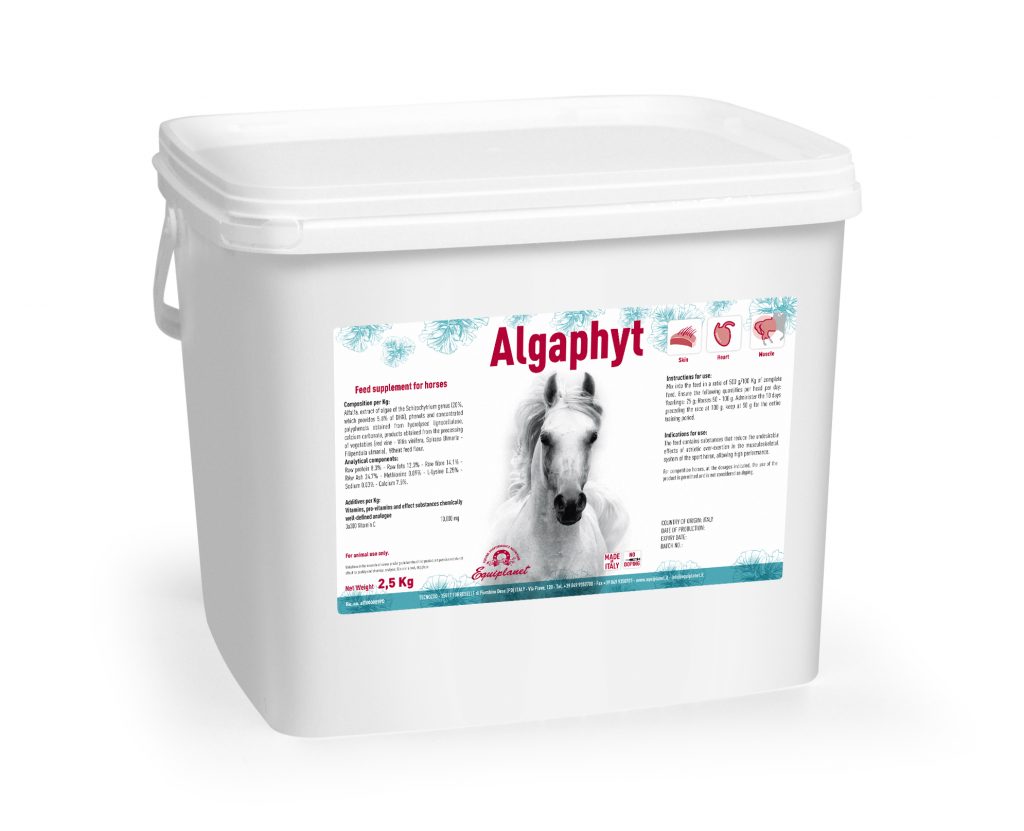
Providing direct sources of EPA and DHA may benefit horses with compromised skin conditions to support immune system physiology. Algal sources of DHA are valid if the daily amount is more than one gram, so when opting to purchase a complementary feed, care should be taken or explanations sought from nutrition experts. Algaphyt contains 5.6% DHA, i.e. the recommended daily amount of 75 grams (between 50 and 100 g/day) provides 4.2 grams of DHA.
Are there any other complementary feeds that help support the horses' skin during the summer period?
There are other raw materials obtained from the processing of dried plants such as Echinacea angustifolia and Ribes Nigrum that help to maintain the wellbeing of the horses' skin during the summer period.

The use of Echinacea has ancient origins, used by Native Americans to support various problems. It is currently used mainly to exploit its immunostimulant properties. Ribes Nigrum, in particular the gemmoderivative, is used in hypersensitivity and is therefore well suited to horses where there is damage to the skin due to insect bites. Both these products obtained from the processing of dried vegetables are contained in Horse Allergyfluid useful to support the animal welfare during the summer season.
Which spray with protective action can I use on my horse?

You can use natural products based on essential oils to spray on the skin of your horse to protect it from insect bites. Ideal Rep contains essential oils of cinnamon, citronella, eucalyptus, sage and geranium and, used several times during the day, protects against insects that may later prove to be responsible for lesions on the horse's skin.
When are there localised skin lesions from insect bites?

If there are localised lesions, typical from flies at the level of the auricle with bleeding, it is possible to use a dermatological cream with a zinc base, such as Derma New, which will act as a protective barrier against other pathogens and subsequently help with normal hair regrowth.
If you have a horse that is prone to problems related to the arrival of the summer season, do not hesitate to contact us and we will give you specific advice for your horse.
Bibliography
- Equine insect bite hypersensitivity: what do we know? A Schaffartzik 2012
- https://ker.com/equinews/omega-3-fatty-acids-may-reduce-sweet-itch-horses/
- Effects of Docosahexaenoic Acid-Rich Microalgae Supplementation on Metabolic and Inflammatory Parameters in Horses With Equine Metabolic Syndrome. Sarah E Elzinga, 2019
- The effect of a supplement containing sunflower oil, vitamins, amino acids, and peptides on the severity of symptoms in horses suffering insect bite hypersensitivity. R van den Boom, 2010
- Studies on phytochemical, antioxidant, anti-inflammatory, hypoglycaemic and antiproliferative activities of Echinacea purpurea and Echinacea angustifolia extracts. Aarland RC, Bañuelos-Hernández AE, 2017
- Skin wound healing and phytomedicine: a review. Pazyar N, 2014

Recent Post


Recommended products

